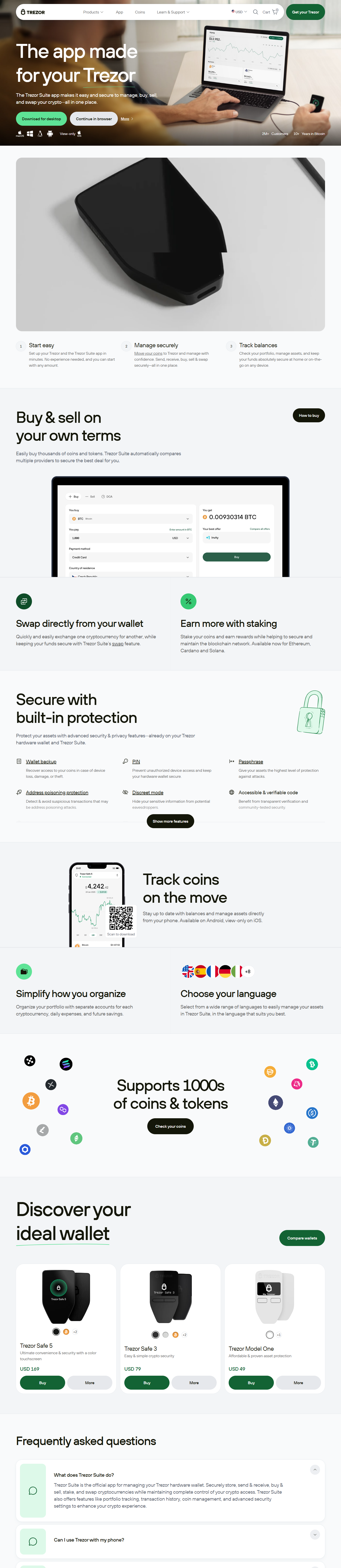
The Trezor Login process is the gateway to managing your digital assets securely through the official Trezor Suite application. Whether you are a beginner in the cryptocurrency world or a seasoned investor, understanding how to properly log in to Trezor Suite is crucial for the protection and management of your assets. This guide provides a detailed overview of the login process, features, benefits, troubleshooting, and essential security practices.
What is Trezor Login?
Trezor Login refers to the authentication method used to access Trezor Suite, the official software interface designed for Trezor hardware wallets. It ensures that only the rightful owner of the hardware device can access stored crypto assets, send transactions, and manage accounts. Unlike traditional logins that rely on usernames and passwords, Trezor Login requires the physical Trezor device and PIN confirmation, making it far more secure.
Steps to Login to Trezor Suite
- Connect your Trezor device to your computer using a USB cable.
- Open Trezor Suite either from the desktop app or via Trezor.io.
- Confirm on device: Trezor will prompt you to verify the connection and authorize login.
- Enter your PIN securely on the Trezor device.
- Optionally, enter your passphrase (if enabled) for extra protection.
- Once verified, access your dashboard to manage accounts, send/receive crypto, and adjust security settings.
Why Trezor Login is More Secure?
Traditional logins often rely on credentials that can be stolen, guessed, or phished. Trezor Login is different because:
- It requires the physical device to confirm login.
- Your private keys never leave the device, ensuring maximum security.
- Each login must be confirmed via the Trezor hardware wallet, making remote hacking nearly impossible.
- Advanced options like passphrase protection add another security layer.
Key Features of Trezor Login
- Multi-Currency Support: Access Bitcoin, Ethereum, and 9,000+ tokens.
- Secure Authentication: Hardware-based confirmation prevents phishing.
- Portfolio Tracking: Monitor balances and transactions in one place.
- Buy & Exchange: Access crypto services directly within Trezor Suite.
- Privacy Settings: Manage anonymity and connection preferences.
Troubleshooting Trezor Login Issues
If you face problems while logging in, try the following:
- Ensure your Trezor device firmware is up to date.
- Check your USB connection or try another cable.
- Restart Trezor Suite and reconnect the device.
- Clear browser cache if using the web version.
- If PIN is forgotten, reset the device and recover using your seed phrase.
Best Security Practices for Trezor Login
To maximize safety:
- Always download Trezor Suite from official sources.
- Never share your recovery seed or passphrase with anyone.
- Keep your Trezor device’s firmware updated.
- Avoid logging in on public or untrusted computers.
- Enable additional passphrase protection if needed.
Conclusion
The Trezor Login process is designed with maximum security in mind. Unlike password-based systems, it leverages hardware-level protection to safeguard your cryptocurrency holdings. By following the correct login steps, keeping your device updated, and practicing good security hygiene, you can enjoy peace of mind knowing that your digital assets are well protected.